This article was published in ‘Peasants’ Voice’, (Vol.1. No.2) the then organ of AIKKMS
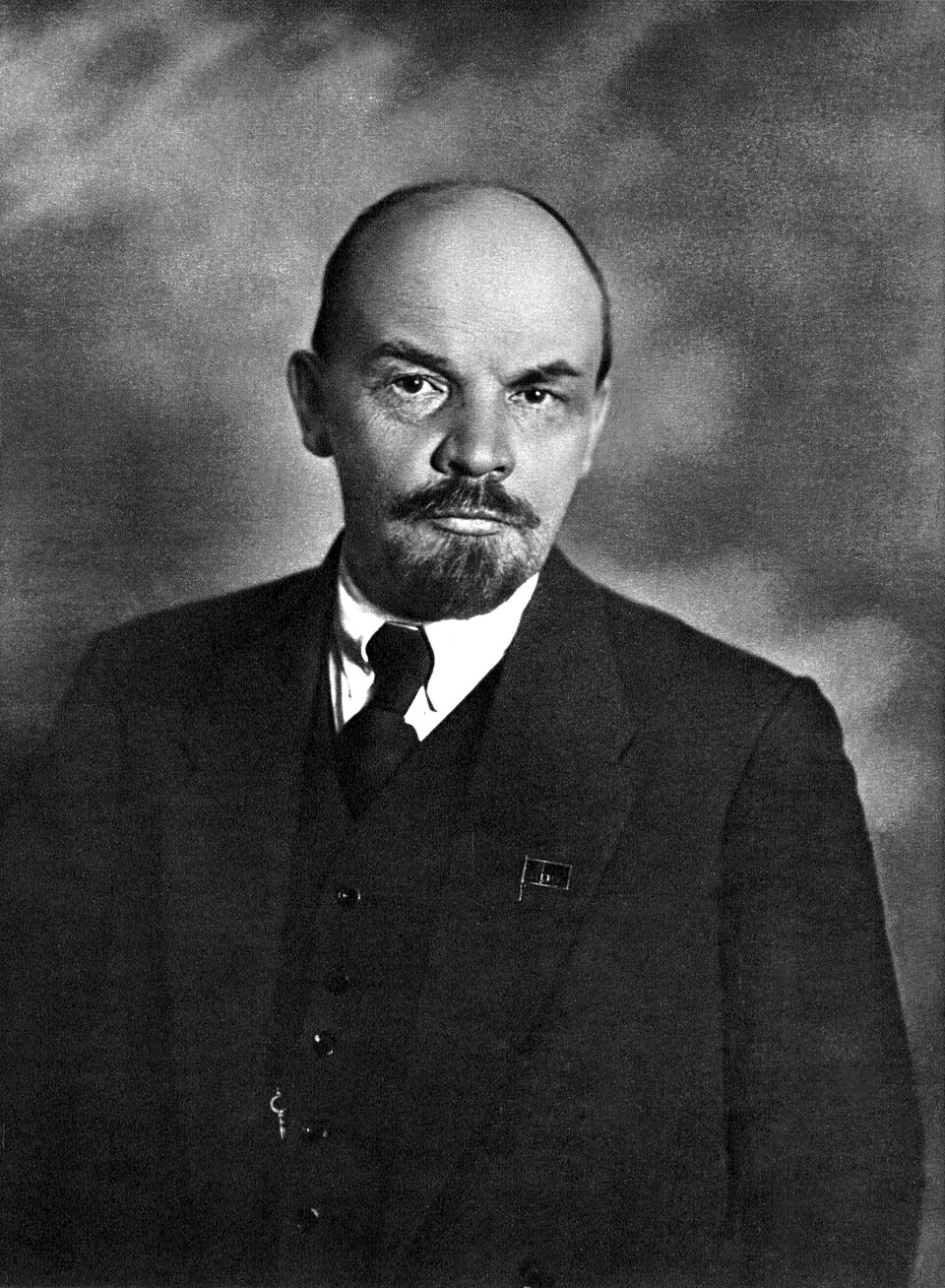
(Great Philosopher, architect of November Socialist Revolution and one of the Marxist authorities Great V.I.Lenin gave a lecture to Sverdlov University Students on the question of State. It was such a vital question that success of November Revolution depended on clearance of the confusion on state even among communist. In view of Indian Socialist Revolution without which the peasantry of India cannot be relieved from their misery excerpts from the above great speech is given here.)
A Lecture Delivered at the Sverdlov University
Comrades, according to the plan you have adopted and which has been conveyed to me, the subject of today’s talk is the state. …the question of the state is a most complex and difficult one, perhaps one that more than any other has been confused by bourgeois scholars, writers and philosophers… …what is the state, how did it arise and fundamentally what attitude to the state should be displayed by the party of the working class, which is fighting for the complete overthrow of capitalism - the Communist Party? …This question has been so confused and complicated because it affects the interests of the ruling classes more than any other question (yielding place in this respect only to the foundations of economic science). The doctrine of the state serves to justify social privilege, the existence of exploitation, the existence of capitalism - and that is why it would be the greatest mistake to expect impartiality on this question, to approach it in the belief that people who claim to be scientific can give you a purely scientific view on the subject. In the question of the state, in the doctrine of the state, in the theory of the state, when you have become familiar with it and have gone into it deeply enough, you will always discern the struggle between different classes, a struggle which is reflected or expressed in a conflict of views on the state, in the estimate of the role and significance of the state. … …it should first of all be noted that the state has not always existed. There was a time when there was no state. It appears wherever and whenever a division of society into classes appears, whenever exploiters and exploited appear. Before the first form of exploitation of man by man arose, the first form of division into classes - slave-owners and slaves - there existed the patriarchal family, or, as it is sometimes called, the clan family. (Clan-tribe; at the time people of one kin lived together.) …there was a time, more or less similar to primitive communism, when the division of society into slave-owners and slaves did not exist. And in those times, there was no state, no special apparatus for the systematic application of force and the subjugation of people by force. It is such an apparatus that is called the state. … But there was a time when there was no state, when general ties, the community itself, discipline and the ordering of work were maintained by force of custom and tradition, by the authority or the respect enjoyed by the elders of the clan or by women - who in those times not only frequently enjoyed a status equal to that of men, but not infrequently enjoyed an even higher status - and when there was no special category of persons who were specialists in ruling. History shows that the state as a special apparatus for coercing people arose wherever and whenever there appeared a division of society into classes, that is, a division into groups of people some of which were permanently in a position to appropriate the labour of others, where some people exploited others. …we had a society without classes - the original patriarchal, primitive society, in which there were no aristocrats; then we had a society based on slavery - a slave owning society. The whole of modern, civilized Europe has passed through this stage - slavery ruled supreme two thousand years ago. The vast majority of peoples of the other parts of the world also passed through this stage. …The division into slaveowners and slaves was the first important class division. The former group not only owned all the means of production - the land and the implements, however poor and primitive they may have been in those times - but also owned people. This group was known as slave-owners, while those who laboured and supplied labour for others were known as slaves. This form was followed in history by another - feudalism. In the great majority of countries slavery in the course of its development evolved into serfdom. The fundamental division of society was now into feudal lords and peasant serfs. The form of relations between people changed. The slave-owners had regarded the slaves as their property; the law had confirmed this view and regarded the slave as a chattel completely owned by the slave-owner. As far as the peasant serf was concerned, class oppression and dependence remained, but it was not considered that the feudal lord owned the peasants as chattels, but that he was only entitled to their labour, to the obligatory performance of certain services. In practice, as you know, serfdom, especially in Russia where it survived longest of all and assumed the crudest forms, in no way differed from slavery. Further, with the development of trade, the appearance of the world market and the development of money circulation, a new class arose within feudal society - the capitalist class. …During the eighteenth century, or rather, from the end of the eighteenth century and during the nineteenth century, revolutions took place all over the world. Feudalism was abolished in all the countries of Western Europe… The owners of capital, the owners of the land and the owners of the factories in all capitalist countries constituted and still constitute an insignificant minority of the population who have complete command of the labour of the whole people, and, consequently, command, oppress and exploit the whole mass of labourers, the majority of whom are proletarians, wage-workers, who procure their livelihood in the process of production only by the sale of their own worker’s hands, their labour-power. With the transition to capitalism, the peasants, who had been disunited and downtrodden in feudal times, were converted partly (the majority) into proletarians, and partly (the minority) into wealthy peasants who themselves hired labourers and who constituted a rural bourgeoisie. … …The history of mankind knows scores and hundreds of countries that have passed or are still passing through slavery, feudalism and capitalism. In each of these countries, despite the immense historical changes that have taken place, despite all the political vicissitudes and all the revolutions due to this development of mankind, to the transition from slavery through feudalism to capitalism and to the present world-wide struggle against capitalism, you will always discern the emergence of the state. It has always been a certain apparatus which stood outside society and consisted of a group of people engaged solely, or almost solely, or mainly, in ruling. People are divided into the ruled, and into specialists in ruling, those who rise above society and are called rulers, statesmen. …And by examining these general phenomena, by asking ourselves why no state existed when there were no classes, when there were no exploiters and exploited, and why it appeared when classes appeared - only in this way shall we find a definite answer to the question of what is the nature and significance of the state. The state is a machine for maintaining the rule of one class over another. When there were no classes in society, when, before the epoch of slavery, people laboured in primitive conditions of greater equality, in conditions when the productivity of labour was still at its lowest, and when primitive man could barely procure the wherewithal for the crudest and most primitive existence, a special group of people whose function is to rule and to dominate the rest of society, had not and could not yet have emerged. Only when the first form of the division of society into classes appeared, only when slavery appeared, when a certain class of people, by concentrating on the crudest forms of agricultural labour, could produce a certain surplus, when this surplus was not absolutely essential for the most wretched existence of the slave and passed into the hands of the slave-owner, when in this way the existence of this class of slave-owners was secure - then in order that it might take firm root it was necessary for a state to appear. And it did appear - the slave-owning state, an apparatus which gave the slave-owners power and enabled them to rule over the slaves. Both society and the state were then on a much smaller scale than they are now, they possessed incomparably poorer means of communication… Mountains, rivers and seas were immeasurably greater obstacles than they are now, and the state took shape within far narrower geographical boundaries. A technically weak state apparatus served a state confined within relatively narrow boundaries and with a narrow range of action. Nevertheless, there did exist an apparatus which compelled the slaves to remain in slavery, which kept one part of society subjugated to and oppressed by another. It is impossible to compel the greater part of society to work systematically for the other part of society without a permanent apparatus of coercion… … The state is a machine for the oppression of one class by another, a machine for holding in obedience to one class other, subordinated classes. There are various forms of this machine. The slave-owning state could be a monarchy, an aristocratic republic or even a democratic republic. In fact, the forms of government varied extremely, but their essence was always the same: the slaves enjoyed no rights and constituted an oppressed class; they were not regarded as human beings. We find the same thing in the feudal state. … Neither under slavery nor under the feudal system could a small minority of people dominate over the vast majority without coercion. History is full of the constant attempts of the oppressed classes to throw off oppression. The history of slavery contains records of wars of emancipation from slavery which lasted for decades. Incidentally, the name “Spartacist” now adopted by the German Communists - the only German party which is really fighting against the yoke of capitalism - was adopted by them because Spartacus was one of the most prominent heroes of one of the greatest revolts of slaves, which took place about two thousand years ago. For many years the seemingly omnipotent Roman Empire, which rested entirely on slavery, experienced the shocks and blows of a widespread uprising of slaves who armed and united to form a vast army under the leadership of Spartacus. In the end they were defeated, captured and put to torture by the slave-owners. Such civil wars mark the whole history of the existence of class society. I have just mentioned an example of the greatest of these civil wars in the epoch of slavery. The whole epoch of feudalism is likewise marked by constant uprisings of the peasants. For example, in Germany in the Middle Ages the struggle between the two classes - the landlords and the serfs - assumed wide proportions and was transformed into a civil war of the peasants against the landowners. You are all familiar with similar examples of repeated uprisings of the peasants against the feudal landowners in Russia. In order to maintain their rule and to preserve their power, the feudal lords had to have an apparatus by which they could unite under their subjugation a vast number of people and subordinate them to certain laws and regulations; and all these laws fundamentally amounted to one thing - the maintenance of the power of the lords over the peasant serfs. And this was the feudal state, which in Russia, for example, or in quite backward Asiatic countries (where feudalism prevails to this day) differed in form - it was either a republic or a monarchy. When the state was a monarchy, the rule of one person was recognised; when it was - a republic, the participation of the elected representatives of landowning society was in one degree or another recognised—this was in feudal society. Feudal society represented a division of classes under which the vast majority - the peasant serfs - were completely subjected to an insignificant minority - the owners of the land. The development of trade, the development of commodity exchange, led to the emergence of a new class - the capitalists. Capital took shape at the close of the Middle Ages, when, after the discovery of America, world trade developed enormously, when the quantity of precious metals increased, when silver and gold became the medium of exchange, when money circulation made it possible for individuals to possess tremendous wealth. Silver and gold were recognised as wealth all over the world. The economic power of the landowning class declined and the power of the new class - the representatives of capital - developed. The reconstruction of society was such that all citizens seemed to be equal, the old division into slave-owners and slaves disappeared, all were regarded as equal before the law irrespective of what capital each owned; whether he owned land as private property, or was a poor man who owned nothing but his labour-power - all were equal before the law. The law protects everybody equally; it protects the property of those who have it from attack by the masses who, possessing no property, possessing nothing but their labour-power, grow steadily impoverished and ruined and become converted into proletarians. Such is capitalist society. …To understand the struggle that has been started against world capital, to understand the nature of the capitalist state, we must remember that when the capitalist state advanced against the feudal state it entered the fight under the slogan of liberty. The abolition of feudalism meant liberty for the representatives of the capitalist state and served their purpose, inasmuch as serfdom was breaking down and the peasants had acquired the opportunity of owning as their full property the land which they had purchased for compensation or in part by quit-rent—this did not concern the state: it protected property irrespective of its origin, because the state was founded on private property. The peasants became private owners in all the modern, civilised states. Even when the landowner surrendered part of his land to the peasant, the state protected private property, rewarding the landowner by compensation, by letting him take money for the land. The state as it were declared that it would fully preserve private property, and the state accorded it every support and protection. The state recognised the property rights of every merchant, industrialist and manufacturer. And this society, based on private property, on the power of capital, on the complete subjection of the propertyless workers and labouring masses of the peasantry, proclaimed that its rule was based on liberty. Combating feudalism, it proclaimed freedom of property and was particularly proud of the fact that the state had ceased, supposedly, to be a class state. Yet the state continued to be a machine which helped the capitalists to hold the poor peasants and the working class in subjection. But in outward appearance it was free. It proclaimed universal suffrage, and declared through its champions, preachers, scholars and philosophers, that it was not a class state. Even now, when the Soviet Socialist Republics have begun to fight the state, they accuse us of violating liberty, of building a state based on coercion, on the suppression of some by others, whereas they represent a popular, democratic state. And now, when the world socialist revolution has begun, and when the revolution has succeeded in some countries, when the fight against world capital has grown particularly acute, this question of the state has acquired the greatest importance and has become, one might say, the most burning one, the focus of all present-day political questions and political disputes. … The forms of domination of the state may vary: capital manifests its power in one way where one form exists, and in another way where another form exists - but essentially the power is in the hands of capital, whether there are voting qualifications or some other rights or not, or whether the republic is a democratic one or not - in fact, the more democratic it is the cruder and more cynical is the rule of capitalism. One of the most democratic republics in the world is the United States of America, yet nowhere (and those who have been there since 1905 probably know it) is the power of capital, the power of a handful of multimillionaires over the whole of society, so crude and so openly corrupt as in America. Once capital exists, it dominates the whole of society, and no democratic republic, no franchise can change its nature. …The bourgeois republic, parliament, universal suffrage - all represent great progress from the standpoint of the world development of society. …Without parliamentarism, without an electoral system, this development of the working class would have been impossible. That is why all these things have acquired such great importance in the eyes of the broad masses of people. That is why a radical change seems to be so difficult. …as long as there is private property, your state, even if it is a democratic republic, is nothing but a machine used by the capitalists to suppress the workers, and the freer the state, the more clearly is this expressed. Examples of this are Switzerland in Europe and the United States in America. Nowhere does capital rule so cynically and ruthlessly, and nowhere is it so clearly apparent, as in these countries, although they are democratic republics, no matter how prettily they are painted and notwithstanding all the talk about labour democracy and the equality of all citizens. The fact is that in Switzerland and the United States capital dominates, and every attempt of the workers to achieve the slightest real improvement in their condition is immediately met by civil war. There are fewer soldiers, a smaller standing army, in these countries - Switzerland has a militia and every Swiss has a gun at home, while in America there was no standing army until quite recently and so when there is a strike the bourgeoisie arms, hires soldiery and suppresses the strike; and nowhere is this suppression of the working-class movement accompanied by such ruthless severity as in Switzerland and the U.S.A. , and nowhere does the influence of capital in parliament manifest itself as powerfully as in these countries. The power of capital is everything, the stock exchange is everything, while parliament and elections are marionettes, puppets… Whatever guise a republic may assume, however democratic it may be, if it is a bourgeois republic, if it retains private ownership of the land and factories, and if private capital keeps the whole of society in wage-slavery, …then this state is a machine for the suppression of some people by others. And we shall place this machine in the hands of the class that is to overthrow the power of capital. We shall reject all the old prejudices about the state meaning universal equality - for that is a fraud: as long as there is exploitation there cannot be equality. The landowner cannot be the equal of the worker, or the hungry man the equal of the full man. This machine called the state, before which people bowed in superstitious awe, believing the old tales that it means popular rule, tales which the proletariat declares to be a bourgeois lie - this machine the proletariat will smash. …We shall use this machine, or bludgeon, to destroy all exploitation. And when the possibility of exploitation no longer exists anywhere in the world, when there are no longer owners of land and owners of factories, and when there is no longer a situation in which some gorge while others starve, only when the possibility of this no longer exists shall we consign this machine to the scrap-heap. Then there will be no state and no exploitation. Such is the view of our Communist Party…